 |
| Home made chai latte |

Showing posts with label non dairy. Show all posts
Showing posts with label non dairy. Show all posts
Tuesday, November 11, 2014
Homemade chai latte and caramel latte
Until last week, I didn't realise it was so easy to make cafe-esque hot drinks at home. I suspect I'm behind the times and everyone else has been chai latteing and caramel latteing in their kitchen for years. I don't have a coffee maker, but it turns out you don't need one to turn a cup of tea or coffee into something special.
I actually gave up milk in my coffee a few months ago, finding that I quite liked it black and very much liked the convenience of not needing specialist milk at work. Recently, though, autumn weather has made all hot drinks appealing and the (non dairy) milk varieties have drawn me back in.


Saturday, April 19, 2014
Spiced ginger latte
This spiced ginger latte is so simple that it barely deserves its own post. However, I am a little bit in love with it, so it is getting a post anyway. It might be one of my favourite drinks ever!

It is unusual for me to rave about a milk-based hot drink. I don't drink hot chocolate (or iced chocolate for that matter) and I find most commercial lattes too milky and too sweet. This drink isn't overly sweet, but it is milky. (I am using 'milky' to refer to non-dairy milks here.)
It is unusual for me to rave about a milk-based hot drink. I don't drink hot chocolate (or iced chocolate for that matter) and I find most commercial lattes too milky and too sweet. This drink isn't overly sweet, but it is milky. (I am using 'milky' to refer to non-dairy milks here.)
Wednesday, April 2, 2014
In my kitchen - April 2014
I am linking this post in to Celia's monthly In My Kitchen event at Fig Jam and Lime Cordial.
In my kitchen, there is So Good's new almond and coconut milk. I try to test new non-dairy milk products in order to update my non-dairy milk review table, and this one was a delightful discovery. I actually enjoy it plain, which is very unusual for me with milk. While it is sweetened, it is also lower in sugar than So Good's regular almond milk.

The downside? It does contain carrageenan. It's getting harder and harder to avoid that ingredient in commercial milk alternatives.

Tuesday, September 3, 2013
In my kitchen - September 2013 (featuring much carob, failed cauliflower crackers, and balloons)
I am linking this post in to Celia's monthly In My Kitchen event at Fig Jam and Lime Cordial.
Do you remember when I discovered carob by Carmel Valley Chocolates, when traversing the Bickley Harvest Festival earlier this year? Well, it doesn't really matter if you don't remember. I did discover it, and now I have discovered the blocks at a supermarket in the city, as opposed to a weekend stall 40 minutes drive away.

Wednesday, May 15, 2013
Failed yoghurt, thank yous, and 11 questions
You may remember that I recently found coconut yoghurt (that reads a bit like I found religion), and that I had high hopes for using the yoghurt as a starter for making non-dairy yoghurt myself.

People, my hopes are dashed.
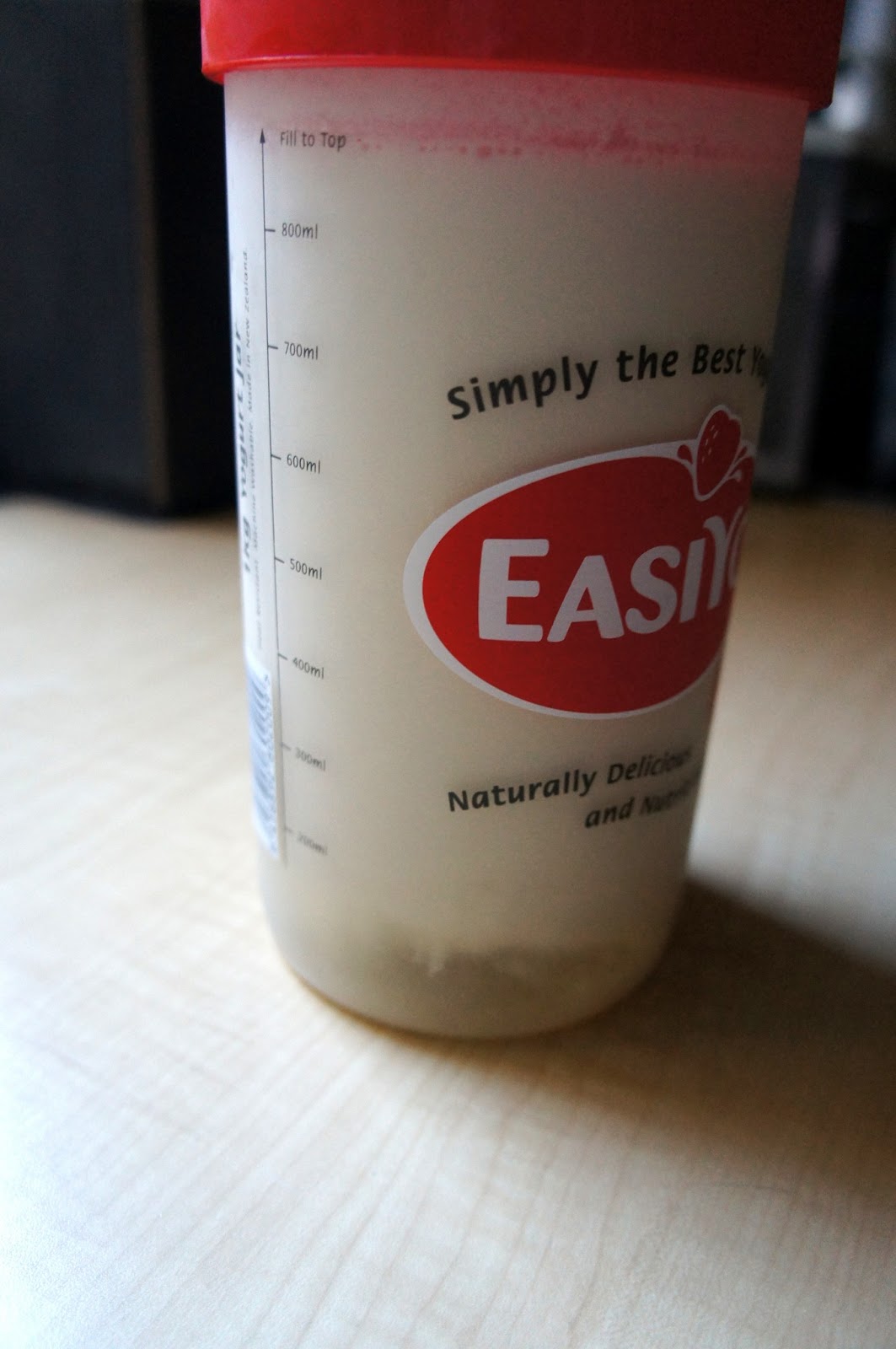
People, my hopes are dashed.
Wednesday, March 13, 2013
Carrageenan, more non-dairy milk reviews, and homemade cashew nut milk
I have made no secret of my joy at Almond Breeze reaching Australia last year. Their unsweetened almond milk took me from someone who drank, perhaps, 500ml soy milk in a week to someone who is getting through 2L of almond milk in the same time frame.
You may imagine my dismay, therefore, when I read Angela's recent post on carrageenan over at Oh She Glows. Like Angela, I hadn't given any thought to carrageenan before having its possible effects pointed out to me. And like Angela, I was horrified to discover that it is used in vegan and organic foods (as well as non-vegan and non-organic ones) despite controversy over whether it is safe for humans to consume.
If you aren't familiar with carrageenan and haven't read Angela's post, I would recommend it. She also includes links to several articles and reviews that may help you make up your own mind about whether or not carrageenan is something you want to consume. In brief, my reading suggests that:


You may imagine my dismay, therefore, when I read Angela's recent post on carrageenan over at Oh She Glows. Like Angela, I hadn't given any thought to carrageenan before having its possible effects pointed out to me. And like Angela, I was horrified to discover that it is used in vegan and organic foods (as well as non-vegan and non-organic ones) despite controversy over whether it is safe for humans to consume.
If you aren't familiar with carrageenan and haven't read Angela's post, I would recommend it. She also includes links to several articles and reviews that may help you make up your own mind about whether or not carrageenan is something you want to consume. In brief, my reading suggests that:
- Carrageenan is derived from red seaweed and is used as an emulsifier and thickener in many dairy and dairy replacement products.
- Carrageenan has two variants: a low molecular weight, "degraded" form and a high molecular weight, "undegraded" form.
- Degraded carrageenan is indisputably a carcinogen in rodents, and has been found to trigger inflammation of the colon in rodents in a way that mirrors irritable bowel disease (IBS) in humans.
- Undegraded carrageenan does not have these harmful effects, but every tested sample of undegraded carrageenan has had some level of contamination by degraded forms of the substance. In some cases this level of contamination reaches 25%.
- In light of (3) and (4), there have been suggestions that humans with IBS avoid all forms of carrageenan.
I don't have IBS, but I am still going to be avoiding carrageenan from now on. I am thus quite devastated that my beloved almond milk has carrageenan listed in the ingredient list. Unfortunately, all forms of Almond Breeze milk (at least those distributed in Australia) include carrageenan. I sent an email in to the company to express my dissatisfaction over their use of the ingredient, but haven't received a response and don't really expect to. I also found it particularly unfair that I discovered carrageenan in Almond Breeze products the very same week I discovered chocolate almond milk at the supermarket.
Update, 16th April 2013: I received an email in response to this post from the Australian Director for Blue Diamond Almond Breeze. He kindly took the time to explain the safety of food grade carrageenan, but the fact remains that food grade carrageenan is often contaminated with degraded carrageenan. After an email exchange on that issue, he indicated that he would read more on the topic and discuss with his American colleagues. It's not often I have that level of interaction with a company and whatever the outcome from here, I am delighted that they are at least considering their use of carrageenan and that they took the time to email me.
Update, 16th April 2013: I received an email in response to this post from the Australian Director for Blue Diamond Almond Breeze. He kindly took the time to explain the safety of food grade carrageenan, but the fact remains that food grade carrageenan is often contaminated with degraded carrageenan. After an email exchange on that issue, he indicated that he would read more on the topic and discuss with his American colleagues. It's not often I have that level of interaction with a company and whatever the outcome from here, I am delighted that they are at least considering their use of carrageenan and that they took the time to email me.
 |
| This could have been so good... |
Can you spot the problem ingredient in the ingredient list below?
 |
| Carrageenan: third line of the ingredients. |
I drank the above anyway, supposedly in the name of research, but my enjoyment was certainly compromised by new-found awareness of the ingredient list. This was a pity, because the milk could have been delightful - full-flavoured chocolate, sweet without being sickly, and creamy without being 'milky' in a traditional sense.
Alas, I moved on and have now crossed Almond Breeze off my drink list. This left me with the task of finding a replacement option for my coffee, and to a lesser extent smoothies and cereal. Initially, I thought I'd jump to Australia's Sanitarium So Good unsweetened almond milk. Sadly, they too include carrageenan in the ingredient list. There is no carrageenan in the sweetened Sanitarium almond milk and so that is what I have been using over the past few weeks. As of mid-2013, there is also carrageenan in the regular, sweetened Sanitarium almond milk.
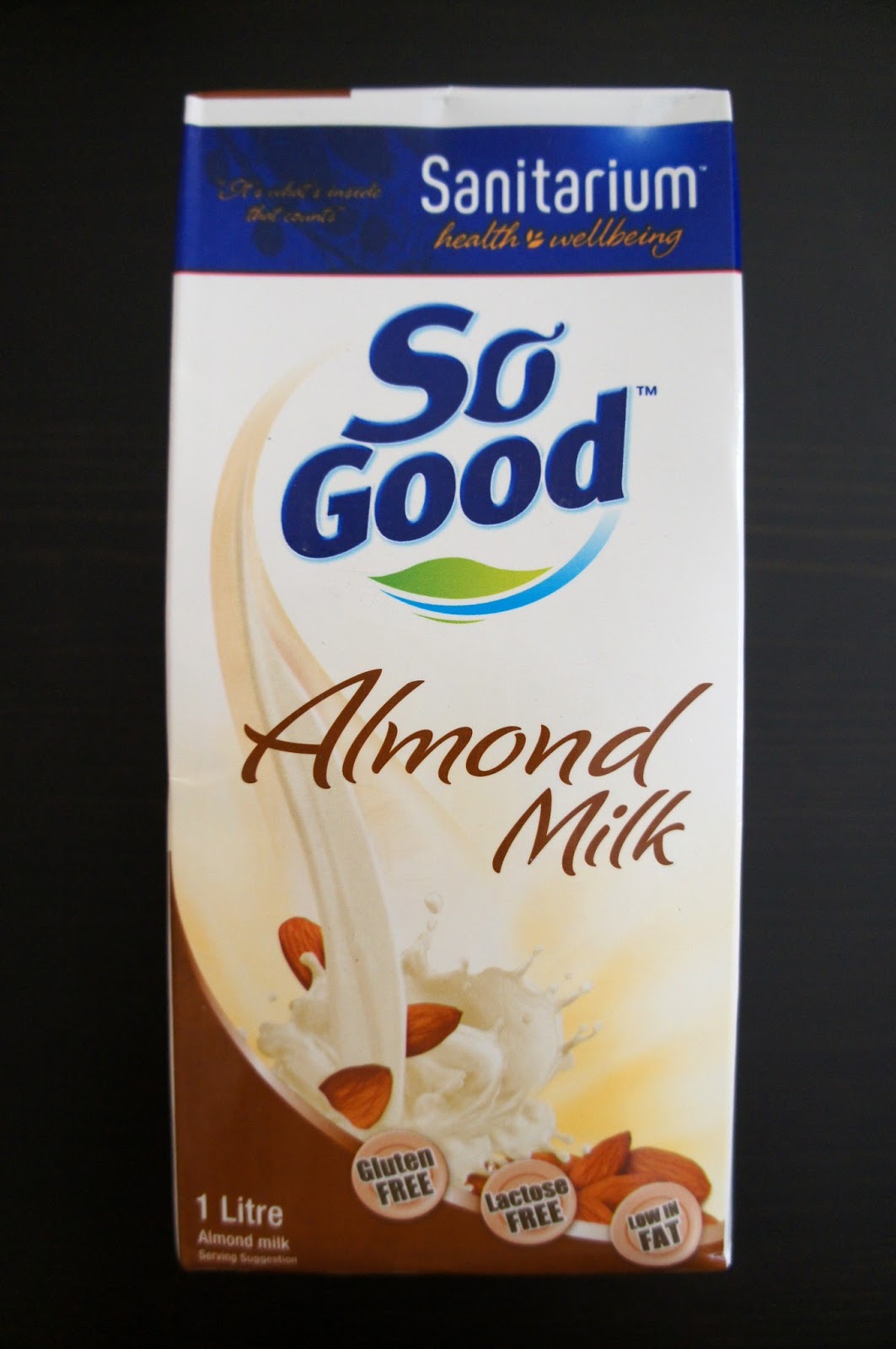
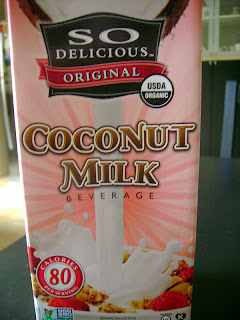
I then thought I would return to the unsweetened So Delicious coconut milk I reviewed in December 2011, but alas! It is no longer in any supermarkets near me, including the one I found it in back then. And also! It has carrageenan in it too.
This week I switched back to soy milk and tried Vitasoy's Vita Cafe low fat soy milk. It has the advantage of coming in regular 1L cartons and 3-packs of smaller, 240ml tetrapacks. The latter are useful if you aren't sure if you'll like the milk, and/or want to take it to work.

I did actually like this, and it has been working in my coffee, which is something I've struggled with when using soy milk in the past. (I think my discovery of how to heat milk, and the need to use a reasonable amount of milk, may have helped with that.) At the same time, I would rather be drinking nut milk. I get enough soy in other forms. Update: See my note at the bottom of the post regarding carrageenan actually being included in this milk, but listed in the ingredient list as vegetable gum 407.
This return to milk frustration led me to try my hand at milk making once again. I haven't done much since I made hemp seed milk last November, largely because I have been happy with Almond Breeze. This time around, I tried cashew milk, because I had cashews sitting spare and I don't much like them on their own.

Basic cashew milk
Makes 3 cups cashew milk
This is a 'thin' milk, similar to low-fat or non-fat dairy milk in texture. If you like creamy milk, use less water to nuts or more nuts to water.
Vegan
Ingredients
1/2 cup raw cashews
3 cups water
Method
Soak the cashews in the 3 cups of water for 4 hours, or longer, in the refrigerator.
Transfer the nut/water mixture to a blender and process until creamy, about 30 seconds.
Strain the mixture through a nut milk bag or cheesecloth, and store in the refrigerator for up to 3 days.
Retain the nut 'pulp' left after straining for use in baking, if desired.

It's a magical process, milk making.
As with homemade hemp seed milk, I liked the experience of making this and I liked the result. The consistency was about right for me, it was satisfactorily not sweet, and it worked fine on cereal and in coffee. The downsides of the homemade route are that it will only last a few days, it's a bit harder to take a container into work for the week, and you don't get the added calcium that comes with commercial non-dairy milk varieties.

At this point, I don't feel like I have hit upon a 'perfect' replacement for Almond Breeze. I am keen for more non-dairy and non-carrageenan options to hit Australian shelves.
I have also updated my non-dairy milk comparison spreadsheet to include a column for whether or not carrageenan is present, and to incorporate chocolate Almond Breeze and VitaSoy vita cafe. I am repeating it below to highlight just how many milks do include carrageenan.
Update: Thanks to Mel from Veganise This, I know now that VitaSoy vita cafe does include carrageenan, but it is listed as vegetable gum 407. I am quite horrified by this. I have double-checked the other milks I've listed below as not including carrageenan, and they don't have carrageenan or vegetable gum 407 listed in their ingredient lists.
Update: Thanks to Mel from Veganise This, I know now that VitaSoy vita cafe does include carrageenan, but it is listed as vegetable gum 407. I am quite horrified by this. I have double-checked the other milks I've listed below as not including carrageenan, and they don't have carrageenan or vegetable gum 407 listed in their ingredient lists.
Do you avoid carrageenan?
Friday, November 23, 2012
Homemade hemp seed milk

I remember when Angela at Oh She Glows wrote, in relation to a home composting system, that "my transition into a tree-huggin, hippy, vegan is now complete" (in May 2011).
I am pretty sure that homemade hemp seed milk puts me in the tree-hugging, hippy, vegan category too. There is just no way to make it sound normal. Ricki seemed to agree when she talked about it recently, with her post titled hippie dippy hemp milk.

While it may sound a long way from 'normal', hemp seed milk does seem to be growing in popularity in North America (and with Australians based within North America). Consistent with this, there are quite a few different recipes around for hemp seed milk. Bryanna Clark Grogan includes step-by-step instructions and some possible variations for the process. Most recipes include agave syrup as a sweetener but the ratio of water to hemp seeds varies enormously, from 2:1 (2 cups water to 1 cup hemp seeds) to 12:1.
I decided to follow the ratio recommended in one of my vegan cookbooks, The 30 Minute Vegan (Reinfeld & Murray). This suggests 4 cups of water to 1 cup of hemp seeds and also advises soaking the seeds for four or so hours before blending. Many online recipes skip over the soaking, but I didn't find it too difficult to put the seeds and water in the fridge ahead of time. I didn't bother with the sweetener, figuring I would try it plain first and adjust after if necessary.
The process is really very easy. Basically, you soak your seeds in water then whiz them up in a blender. The pictures below show the transformation, with a fairly dirty looking water with seeds in it (top) being converted to a fluffy, creamy 'milk' (bottom).

If you stopped here, you would still have seeds floating in your milk, so this is where a nut milk bag or cheesecloth comes in. I have seen the bags in various health food stores and they aren't expensive. Simply pour the milk mixture through the bag, with a container underneath to catch the strained liquid, and then squeeze out the seeds that are left behind. It's a fun process.

I did end up with a sludge after the straining, which may suggest I didn't squeeze the seed remnants enough. I will look into possible uses for the leftover seeds in the future, as it felt like a waste to throw them out. (Does anyone have any suggestions?)

When you have strained your liquid, you end up with a thick, creamy hemp seed milk that is ready for hot or cold drinks, cereal, or drinking straight up. Homemade nut and seed milks reportedly keep for about 3 days in the fridge, and I found my version to last well over that time frame.
 |
| Version 1 - super creamy |
I wasn't sure what to expect from hemp seed milk, and was concerned it might be a little bitter. As it turns out, I really, really liked it. It is nutty and a little earthy, but not at all bitter - and keep in mind I didn't add sweetener. It works brilliantly in coffee, and in chai lattes.

I did find the 4:1 ratio to yield a very creamy milk, and I ended up trying to water my first version down. After reading Bryanna Clark Grogan's post I realised that her lighter, 12:1 ratio recipe was probably closer to the sort of milk I usually use (unsweetened almond milk) and more aligned with my tastebuds. The only problem with a 12:1 ratio is that you can end up with a lot of milk, far more than I would get through in three days.
Given the above, I made my second batch with 1 cup of water and just 1 tablespoon of hemp seeds. This gives a 12.5:1 ratio and has the benefit of making a small serve, perfect for one day or so.
 |
| Version 2 - a little thinner |
I found this second version to have a much better consistency, and I think you can tell from the photos that it is thinner. If you like creamy milk then my first batch would probably suit you well, but if you're used to almond milk or skim / semi-skim cow's milk then the second version is more similar to those products.
Basic hemp seed milk
Makes 1 cup; increase ingredient proportions to taste or need
Vegan
Ingredients
1 tbsp hemp seeds
1 cup water
Method
Soak the hemp seeds and water for 4 hours, or longer, in the refrigerator.
Transfer the seed/water mixture to a blender and process until creamy, about 30 seconds.
Strain the mixture through a nut milk bag or cheesecloth, and store in the refrigerator for up to 3 days.
 |
| Hemp seed milk on weetbix, and hemp seed milk in coffee - a good Sunday morning |
To my delight, I have also hit upon consistent success with using non-dairy milks in coffee, which is something I had a lot of trouble with in the past. I now use at least 1/2 cup of non-dairy milk (vs. about 1 tbsp when I used cow's milk) and warm it in the microwave before topping up with hot water. This prevents the curdling I used to experience, and I really enjoy the resulting flavour.
I never would have thought I could enjoy milk, non-dairy or not, but this is one area where I am pleased to admit that I was wrong! I don't see myself drinking it plain any time soon, but I am getting through over a litre a week now (mostly almond milk, when I'm not playing with hemp seeds) and it's a shift I'm very happy with.
I am linking this post into the Healthy Vegan Friday event hosted by Gabby, Shelby and Carrie.
Have you made nut / seed milk at home? Or tried commercial hemp seed milk?
Monday, December 5, 2011
More non-dairy milk - but with bonus! over! excitement!
I imagine that after this post, you thought I was finished with milk and milk alternatives.
Me too.
Sorry about that.
You see, recently I found these:


And then, even more recently, I saw that So Good (one of Australia's largest soy milk brands) now does Almond milk.
Are you experiencing a rush of excitement alongside me? No? Maybe the full story will help...
The first (pictured) discoveries were made on a Monday, and a Monday when I was due to work from 7.30am (ish) to 7.00pm. I do this once a fortnight and it is fine, but on this particular week, I was also going to work from 8.00am (ish) to 8.00pm on the Wednesday, and so the first half of the week was looking a little long.
But then, for various contextual reasons, I didn't need to work until 7.00pm. In fact, I could finish at 4.30pm. And so I did.
What does one do when one is granted a bonus window of time that is nearly at the end of the day, but not quite?
In my case, the answer is visit a rarely visited supermarket. The supermarket that stocks exciting chocolate, liquorice tea, and just about the full range (I think) of Orgran vegan and gluten-free biscuits.

The supermarket in question, in case you were wondering, is a Farmer Jack's, a Western Australian variation of the independent Foodworks company. They aren't cheap supermarkets - especially not for me - but they can be exciting ones.
On this particular day, I was happily browsing the aisles, with no items as yet in my hands. I had travelled down the chocolate aisle, still had the organic and 'health food' aisle to go, and was passing the cereals and snack bars when the shelf-stable milks caught my attention.
Honestly, excitement doesn't do the experience justice. Giddy, oh-my-goodness-me thoughts and an adrenalin rush that I suspect could have been put to better use (running a marathon, say) than making me near hyperventilate in the supermarket.
The chocolate hazelnut milk caught my eye first...

In effect, nutella in vegan milk form. The ingredient list and nutritional information confirmed that this was definitely a dessert milk, but I didn't care. I was smitten and I was holding the carton tightly.
And then I looked along the shelf. Near hyperventilation may have progressed to hyperventilation.
In addition to the So Delicious Original Coconut Milk I previously found and reviewed, they had Vanilla and Unsweetened Original Coconut Milk in the 920ml size. They also had Vanilla, Unsweetened Original, and Chocolate varieties in the 8-pack 'grab and go' 190ml cartons.

Why does the opportunity to pay twice as much for individual packaging, that involves extra production and recycling work no less, make me happy? Well, 200ml of coconut milk per week is about all I really want. This way I can spread my consumption out and not end up wasting half a 920ml tetrapack. Also, remember those 7.30am start work days? They typically occur when I go straight from the gym to work. On those days, tetrapack non-dairly milk has the potential to be very useful.
After discovering this range of So Delicious milks, I nearly ran to the freezer section to see if they had started stocking the icecream range too. Sadly, no - nor the yoghurts - but on reflection I think it may be for the best. My heart rate and bank account may not have coped otherwise.
The verdict with regard to taste?
The chocolate hazelnut milk was, hands down, the best chocolate milk I have ever tasted. I can now say that I like chocolate milk, not just on cereal but on its own, when it is in this form. It has a deep chocolatey flavour that is enticing without being overpowering. Somehow it manages to not taste milky, whilst still seeming like chocolate milk, which is difficult to accurately describe but means I like it very, very much.

The milk was surprisingly pale in appearance, but the taste was richer than the colouring would imply.

All in all, I loved this milk. As with other nut milks, you can't taste the hazlenut, but the overall taste is one I would recommend.
The unsweetened coconut milk tasted, well, creamy without being too creamy, and slightly odd in its lack of sweetness. I liked it, but the taste wasn't like that of a milk drink I had previously tried.

It didn't curdle in coffee, consistent with what I found with the sweetened original version I previously tried, but in that form it tasted rather bitter - so I don't think I'll be using it for that. I like the idea of being able to take cereal and coconut milk to work, though, given I do have breakfast there twice a week and would be more than happy to snack on cereal with this milk in the afternoons of my longer work days.
(As opposed to dry cereal, which I already do more often than I like to admit.)
I have also found that cereal sucks this milk up in a rather pleasing way - for me at least, given I am quite fond of mushy cereal, even though traditionally I have liked my mush made with water.

With regard to the So Good Almond Milk, I haven't actually tried this yet. I really couldn't justify any more milk purchases, but will give this a go as soon as my current stock of milk is run down. In the mean time, I have added the nutritional information to my original spreadsheet, and also updated that post with summary details of the two milks above.
I also promise, solemnly, not to do more milk posts for a little while. It's getting to be hard to believe that I technically don't like milk at all...
Have you had any exciting supermarket discoveries lately? Or tried any of the above products?
Me too.
Sorry about that.
You see, recently I found these:


And then, even more recently, I saw that So Good (one of Australia's largest soy milk brands) now does Almond milk.
Are you experiencing a rush of excitement alongside me? No? Maybe the full story will help...
The first (pictured) discoveries were made on a Monday, and a Monday when I was due to work from 7.30am (ish) to 7.00pm. I do this once a fortnight and it is fine, but on this particular week, I was also going to work from 8.00am (ish) to 8.00pm on the Wednesday, and so the first half of the week was looking a little long.
But then, for various contextual reasons, I didn't need to work until 7.00pm. In fact, I could finish at 4.30pm. And so I did.
What does one do when one is granted a bonus window of time that is nearly at the end of the day, but not quite?
In my case, the answer is visit a rarely visited supermarket. The supermarket that stocks exciting chocolate, liquorice tea, and just about the full range (I think) of Orgran vegan and gluten-free biscuits.

On this particular day, I was happily browsing the aisles, with no items as yet in my hands. I had travelled down the chocolate aisle, still had the organic and 'health food' aisle to go, and was passing the cereals and snack bars when the shelf-stable milks caught my attention.
Honestly, excitement doesn't do the experience justice. Giddy, oh-my-goodness-me thoughts and an adrenalin rush that I suspect could have been put to better use (running a marathon, say) than making me near hyperventilate in the supermarket.
The chocolate hazelnut milk caught my eye first...

In effect, nutella in vegan milk form. The ingredient list and nutritional information confirmed that this was definitely a dessert milk, but I didn't care. I was smitten and I was holding the carton tightly.
And then I looked along the shelf. Near hyperventilation may have progressed to hyperventilation.
In addition to the So Delicious Original Coconut Milk I previously found and reviewed, they had Vanilla and Unsweetened Original Coconut Milk in the 920ml size. They also had Vanilla, Unsweetened Original, and Chocolate varieties in the 8-pack 'grab and go' 190ml cartons.

Why does the opportunity to pay twice as much for individual packaging, that involves extra production and recycling work no less, make me happy? Well, 200ml of coconut milk per week is about all I really want. This way I can spread my consumption out and not end up wasting half a 920ml tetrapack. Also, remember those 7.30am start work days? They typically occur when I go straight from the gym to work. On those days, tetrapack non-dairly milk has the potential to be very useful.
After discovering this range of So Delicious milks, I nearly ran to the freezer section to see if they had started stocking the icecream range too. Sadly, no - nor the yoghurts - but on reflection I think it may be for the best. My heart rate and bank account may not have coped otherwise.
The verdict with regard to taste?
The chocolate hazelnut milk was, hands down, the best chocolate milk I have ever tasted. I can now say that I like chocolate milk, not just on cereal but on its own, when it is in this form. It has a deep chocolatey flavour that is enticing without being overpowering. Somehow it manages to not taste milky, whilst still seeming like chocolate milk, which is difficult to accurately describe but means I like it very, very much.

The milk was surprisingly pale in appearance, but the taste was richer than the colouring would imply.

All in all, I loved this milk. As with other nut milks, you can't taste the hazlenut, but the overall taste is one I would recommend.
The unsweetened coconut milk tasted, well, creamy without being too creamy, and slightly odd in its lack of sweetness. I liked it, but the taste wasn't like that of a milk drink I had previously tried.

It didn't curdle in coffee, consistent with what I found with the sweetened original version I previously tried, but in that form it tasted rather bitter - so I don't think I'll be using it for that. I like the idea of being able to take cereal and coconut milk to work, though, given I do have breakfast there twice a week and would be more than happy to snack on cereal with this milk in the afternoons of my longer work days.
(As opposed to dry cereal, which I already do more often than I like to admit.)
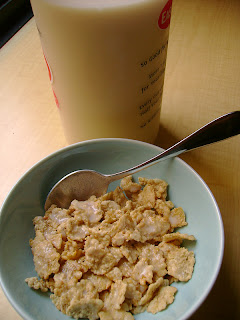
I have also found that cereal sucks this milk up in a rather pleasing way - for me at least, given I am quite fond of mushy cereal, even though traditionally I have liked my mush made with water.

This isn't the same bowl of cereal as above, but looked fairly similar before it was left to soak: sultana bran with 100ml (or so) of the coconut milk, left for 30 minutes in the fridge. With mango.
With regard to the So Good Almond Milk, I haven't actually tried this yet. I really couldn't justify any more milk purchases, but will give this a go as soon as my current stock of milk is run down. In the mean time, I have added the nutritional information to my original spreadsheet, and also updated that post with summary details of the two milks above.
I also promise, solemnly, not to do more milk posts for a little while. It's getting to be hard to believe that I technically don't like milk at all...
Have you had any exciting supermarket discoveries lately? Or tried any of the above products?
Thursday, November 24, 2011
Making non-dairy yoghurt
One of the things on my 5 Things I Would Like To Make list was non-dairy yoghurt. After some months of experimentation, I am pleased to finally have some things to report. Not all good things, mind you, but things nonetheless.
If you dislike yoghurt then I'm afraid this post may not be the one for you. However, if you do, and/or if you might want to make yoghurt yourself one day, I hope some of the following may be of use.


A 3-pack of sachets costs $9.95, so the cost for 1L made this way is $3.32. In other words, less than half of the price of commercial yoghurts.
It took me a little while to work my way up to my non-dairy aspirations. After trying out the sachets, I thought I would try doing things 'properly', using skim milk powder and a yoghurt starter.
Brydie talked about this recently, using the same EasiYo containers. My approach was virtually identical to hers, with 1.5 cups of milk powder and about 2 tablespoons of yoghurt as the starting ingredients. You mix those up with water, in the 1L jar, and then go through the same process as with the sachets.
I used skim milk powder for this rather than full-cream, and I think a mixture of the two may work slightly better than skim alone. My verdict on this, when made with skim milk powder, is that it wasn't quite as thick as the 'cheat' option (or the store bought varieties). Whilst it was still delicious, I was left preferring the sachet overall.


This does have the advantage of being very economical though, coming in at about $1.50 - $2 per 1L - and I suspect that using some full-cream milk powder would make it thicker if desired.
When I was finally ready to enter non-dairy territory, I was faced with the challenge of choosing precisely what non-dairy option to pursue. I knew I didn't want to make soy yoghurt, as I like to vary things away from soy whenever possible (given it is the default non-dairy option available commercially). For those who are interested in making soy yoghurt, though, some links are at the end of this post.
The non-dairy milk comparisons I blogged last month were actually part of this decision-making process, as I wanted to start with a milk that I liked the taste of and (ideally) which contained reasonable amounts of protein and calcium.
Based on those comparisons, I decided to try protein-enriched rice milk and coconut milk yoghurts.

I actually left this for over 14 hours, as I found it didn't thicken as readily as the dairy variety. Even with the slightly longer standing time, the final product was still, if I'm honest, more like drinking yoghurt than yoghurt. Very good with cereal, but not so much in a bowl on its own.


If you dislike yoghurt then I'm afraid this post may not be the one for you. However, if you do, and/or if you might want to make yoghurt yourself one day, I hope some of the following may be of use.
The background
Why did I want to make yoghurt at all? After discovering that gelatin was in almost all of the commercial yoghurts sold in Australia, I switched a few years ago to favouring the natural pot-set yoghurt varieties. Comparing typical commercial yoghurts with natural pot-set yoghurts (Jalna is a particular favourite) is like comparing a Mars bar with quality dark chocolate. They aren't the same at all, and whilst the latter in each comparison is probably an acquired taste, I well and truly acquired a preference for pot-set.

The problem with this switch is that, over time, it became harder and harder to find my preferred brands. Where pot-set varieties were available, they were increasingly of the flavoured sort, and I was having to invest more and more effort to track down the type I liked. Driving to a supermarket with the specific goal of buying yoghurt was getting a little frustrating.
This supermarket inconvenience corresponded with my experimentation with reducing dairy, and so the idea of making non-dairy yoghurt was born.
For reference, I shall note here that a 500g tub (0.5L) of natural pot-set yoghurt usually cost in the vicinity of $4, or a little higher, when bought from the supermarket. Let's see if we can beat that $8 / 1L benchmark, and achieve just as good a result...
The first step - cheating
Although my goal was to make non-dairy yoghurt, I actually started at the other end of the spectrum. So much so that instead of making non-dairy yoghurt from scratch, I was making dairy yoghurt from a sachet. It doesn't sound quite the same does it?
I invested in an EasiYo yoghurt maker, which is effectively a 1L jar and a larger thermos-type thing in which the yoghurt sits while it is fermenting. These cost about $20, and the EasiYo products seem to be available in a number of shops in Western Australia (in my case, I found that Big W had the biggest range of yoghurt sachet options, designed to go with the yoghurt maker).


To my slight embarrassment, I picked the 'Skimmers' EasiYo sachets as what seemed like the closest to the yoghurt I usually buy. I would have preferred a different name, but there you go. There are plenty of flavoured options too, if you prefer something with a better title and/or with added sugar and flavour (there is also a Greek-style option).

The ingredient list of the Skimmers variety is nice and short: pasteurised skim and whole milk solids (98%), from free range cows, and live lactic cultures.
There is no real challenge in making this yoghurt. You pour a sachet into the 1L jar, fill it half way up with cold water, put the lid on, shake, continue filling the jar up with cold water, shake again, fill the thermos thingy up half way with boiling water, put the 1L jar in the thermos, put the lid on, and wait.
You can wait anywhere from 8 hours until (reportedly) 24 hours - I've settled on about 12 hours as my favourite time frame to get the yoghurt nice and thick.
The verdict on this cheating option? Perfection in a bowl. Seriously. And despite how easy it is to make, there is still a strong sense of satisfaction at making the yoghurt yourself.


A 3-pack of sachets costs $9.95, so the cost for 1L made this way is $3.32. In other words, less than half of the price of commercial yoghurts.
The second step - still on dairy
It took me a little while to work my way up to my non-dairy aspirations. After trying out the sachets, I thought I would try doing things 'properly', using skim milk powder and a yoghurt starter.
Brydie talked about this recently, using the same EasiYo containers. My approach was virtually identical to hers, with 1.5 cups of milk powder and about 2 tablespoons of yoghurt as the starting ingredients. You mix those up with water, in the 1L jar, and then go through the same process as with the sachets.
I used skim milk powder for this rather than full-cream, and I think a mixture of the two may work slightly better than skim alone. My verdict on this, when made with skim milk powder, is that it wasn't quite as thick as the 'cheat' option (or the store bought varieties). Whilst it was still delicious, I was left preferring the sachet overall.


This does have the advantage of being very economical though, coming in at about $1.50 - $2 per 1L - and I suspect that using some full-cream milk powder would make it thicker if desired.
The third step - choosing a non-dairy option
When I was finally ready to enter non-dairy territory, I was faced with the challenge of choosing precisely what non-dairy option to pursue. I knew I didn't want to make soy yoghurt, as I like to vary things away from soy whenever possible (given it is the default non-dairy option available commercially). For those who are interested in making soy yoghurt, though, some links are at the end of this post.
The non-dairy milk comparisons I blogged last month were actually part of this decision-making process, as I wanted to start with a milk that I liked the taste of and (ideally) which contained reasonable amounts of protein and calcium.
Based on those comparisons, I decided to try protein-enriched rice milk and coconut milk yoghurts.


The coconut milk didn't have the protein or calcium content I was hoping for, but I thought the slightly higher fat content might be useful for yoghurt-making, and I knew that others had made coconut milk yoghurt successfully before.
The fourth step - rice milk yoghurt
For this, I mixed about 1/4 cup soy vanilla yoghurt (as a starter) with nearly 1L of the Vitasoy protein enriched rice milk pictured above - enough milk to fill up the 1L jar, when mixed with the starter yoghurt. The 1L jar went inside the EasiYo thermos half filled with boiling water, and was left to ferment away.

Whilst some separation of liquids is normal with pot-set yoghurt (as the whey separates from the yoghurt), this was also more marked with the rice milk variety:


I do wonder whether spooning off the top whey layer would have made the overall product thicker, but I just kept stirring the two layers back together. I think the separation is probably related to the amount of yoghurt starter, which is somewhat of a moving target when making yoghurt at home. In this instance I may have used a little too much soy yoghurt at the beginning.
All in all? The tart yoghurt taste was there, and it was thicker than regular rice milk, but it wasn't at all like dairy yoghurt. With that said, I did like it, and will continue to play around with this to try and get the proportions right and reduce the whey-yoghurt separation.
This option works out to be about $3 per 1L. Still big savings!
The fifth step - coconut milk yoghurt
I had such high hopes for this. After my experience with the rice milk yoghurt being a bit too thin, I added 1 tsp agar-agar flakes to the ingredient list, in an attempt to thicken the final product. The agar went into the 1L EasiYo jar with 1/4 cup soy yoghurt starter and just under 1L coconut milk, to ferment in the thermos in the same way as above.
Sadly, this was a dismal fail. In every sense possible.
The whey-yoghurt separation was so pronounced that the 'yoghurt' was extremely odd to look at and far too off-putting to even taste:


Not quite what I was looking for.
I'm unsure if the problem here was not enough sugar for the yoghurt bacteria to breed on - as the coconut milk was lower in sugar than some of the other non-dairy options (and than regular milk) - or whether it was the soy yoghurt starter. I know that some people use commercial powdered yoghurt starter to make yoghurt at home, which I guess is similar to what comes mixed into the EasiYo sachets.
I do wonder if that would work better than guessing at soy yoghurt quantities, especially as it would also be a 'purer' source of the live cultures. Also, I don't know if soy yoghurt and coconut milk go together particularly well, and if not, trying to combine them here may not be sensible. Unfortunately, I've not been able to find the powdered yoghurt starter and am reluctant to order it online when it may not prove to be any use.
All in all, then, this did not inspire me to pursue coconut yoghurt! It was also rather an expensive mistake, considering the $5 price tag per 1L carton of coconut milk (albeit still cheaper than store-bought yoghurt). I know that coconut milk yoghurt is possible, but I may take a break to re-gain confidence before trying it again...
The sixth step - reflection
Interestingly, after this process of experimentation, I went back to the EasiYo sachets (I had two left) and fell in love with yoghurt all over again. After trying the slightly thinner options that came from skim milk powder and rice milk, the EasiYo result was noticeably thicker and more enjoyable.
As the sachets don't require a yoghurt starter to be on hand (useful given that I'm happy to have a few days off between yoghurt batches, and don't really want to keep buying soy yoghurt to start things off), and the ingredient list is short enough to seem 'almost' from scratch, I suspect that this cheating option may in fact remain my default. It isn't dairy-free, in fact quite the opposite, but this may be a time where I need to acknowledge that real milk does have its place.
With all of that said, I will continue trying rice milk yoghurt and if I ever see powdered yoghurt starter I will re-commence experimentation. I'm certainly glad I went through this process and I love the fresh taste, the reduced cost, the reduced packaging, and the ability to have the resulting yoghurt plain or mixed in with any flavours or add-ins as desired.


For other references on yoghurt making, I collected the following bookmarks -
Soy:
Coconut:
Nut:
Oat:
Dairy:
Tuesday, October 25, 2011
Multi-product review: Non-dairy milk options
An Introductory Summary
The table below summarises the milks I have reviewed. I've also included nutritional information here, so it's easier to compare across milks. For purposes of comparison, I've listed details for skim and regular (full-fat) cow's milk too.
I update this table whenever I review a new milk, and have noted at the end of this post when updates were made. Milks are listed alphabetically. Note that all soy milks listed here make use of non-genetically modified soy beans.
The original post (October 2011) continues below, with a list of updates (and links to other relevant posts) at the end.
Non-Dairy Milk: Some Background
This post has been a little while in the making, and I’m excited to finally be able to post it. It’s been quite a fun process getting here.
Prior to this year, I had never given much thought to non-dairy milk alternatives. Although I was lactose intolerant as a child, the only milk alternative I remember at that time was soy, and I didn’t much like it. I’ve also never really enjoyed regular milk, and dairy products haven’t traditionally been a big part of my diet (except in yoghurt form).
Since actively trying to reduce or eliminate dairy, I’ve realised that not using milk a lot is very different to not using it at all. The small uses have proved surprisingly hard to change! This is especially true of tea and coffee, as I find non-dairy milks often curdle when added to hot drinks.
This is a summary of the different options I have tried over the last few months. It does, of course, reflect my own personal biases, and is by no means complete. The idea is to give a sense of some of the options out there, but there are more I haven't touched on.
So Good 99.9% Fat Free Soy milk
Soy products are still the easiest milk alternative to find in Australia. In the long-life milk aisle, there are non-fat, low-fat, calcium enriched and flavoured UHT options, from multiple companies, and refrigerated options are also available.
If you're switching from skim cow's milk, as I was, non-fat soy milk may seem like a good substitute. As the table above shows, it's certainly the closest option in nutritional terms.
Summary: I find this milk to be more watery (and slightly dirtier looking in colour!) than skim cow’s milk, but in my case this isn’t particularly off-putting. If you actually enjoyed milk, though, I think it would be.
Taste: Faintly soy-like, slightly watery.
Ingredients: Filtered water, soy protein (3.5%), corn maltodextrin, cane sugar, minerals (phosphates of calcium, potassium and magnesium), acidity regulator (332), natural flavours, vegetable based emulsifier (471), antioxidant (ascorbic acid), vitamins (A, B12, B2, B1).
Would I drink a glass plain: No.
Does it work in tea / coffee: No - it curdles, as I find most soy milks to do. (I drink instant coffee at home, and I think the problem is less noticeable if the milk is heated and used in a coffee maker.)
I would use it for: Baking, and on cereals where I don’t want a lot of milk (most of them!).
Price: ~$2.65 (Australian) for a 1L shelf stable UHT tetrapack.
Overall: 6 / 10. I tend to think of this as a default ‘go to’ option if I want to substitute a non-dairy alternative for cow’s milk, but I wouldn’t drink it plain.
Overall: 6 / 10. I tend to think of this as a default ‘go to’ option if I want to substitute a non-dairy alternative for cow’s milk, but I wouldn’t drink it plain.
So Good ‘Chocolate Bliss’ chocolate flavoured soy milk
Summary: This comes in a 1L shelf stable tetrapack, and in packs of 3x 250ml individual tetrapacks. Although the small packs work out to be more expensive, I rarely want a whole litre of milk each week, and so they are better value for me. I enjoy this as a change from the other non-flavoured options and I like the chocolate taste.

Taste: Chocolatey, with a detectable but not overpowering soy taste. Thick enough for my liking.
Ingredients: Filtered water, soy protein (3.5%), cane sugar, corn maltodextrin, fructose, vegetable oils (sunflower, canola) [contains antioxidant (tocopherols) (contain soy)], minerals [phosphates of calcium, potassium and magnesium], cocoa powder (0.5%), acidity regulator (332), flavour, antioxidant (ascorbic acid), vitamins [A, B12, B2, B1].
 Would I drink a glass plain: Yes.
Does it work in tea / coffee: Pretty sure not :P
I would use it for: Drinking plain, and on weetbix (try it!).
Price: ~$2.65 (Australian) for a 1L shelf stable UHT tetrapack, or ~$3.80 for 3x 250ml single serve tetrapacks.
Overall: 7.5 / 10. It’s one of the few milk-related drinks I would have plain, and despite being flavoured, it’s lower in sugar than some of the unflavoured alternatives coming up.
Vitasoy Protein Enriched Rice Milk
Summary: This appealed to me because of the addition of chick pea derived protein. I haven’t tried regular rice milk so am unable to comment on any differences between this variety and non-protein enriched options, but I certainly liked this.
Taste: Difficult to describe - there was a greater depth in flavour than most of the other milks. I would describe it as slightly nutty and slightly oaty, but I don’t know if others would agree. It doesn't actually taste of nuts or oats, but it seemed reminiscent of both in my mind. It's not too sweet, but it is sweet enough to seem drinkable plain.
 Ingredients: Filtered water, whole brown rice (min 11%), chick peas (min 5%) sunflower oil, calcium, phosphate, sea salt.
Would I drink a glass plain: Probably.
Does it work in tea / coffee: No - still curdles, sadly :(
I would use it for: This works amazingly well with cereal and oats, especially if the oats are left to stand for a few hours or overnight (they go super, super fluffy!). It could also be used in place of milk in most recipes, sweet and savoury, and I would use it in smoothies.
Price: ~$2.85 (Australian) for a 1L shelf stable UHT tetrapack.
Overall: 9 / 10, because of the protein and calcium ticks, the reasonable price, the pleasant taste, and the number of things I would use it for. I really liked this milk!
Pure Harvest Organic Almond Milk, unflavoured
Summary: This was the first almond milk variety I tried, and the one that is most commonly available at supermarkets near me. Although this variety is unflavoured, it seems like a ‘sweet’ milk - and that is borne out when looking at the sugar content per 100g. It's definitely suited to cereals and fruit rather than savoury use.
Taste: This is a slightly paradoxical milk: it's sweet and slightly creamy but doesn't seem heavy or overpowering; it's very low in fat but certainly not lacking in flavour; and it's unflavoured (albeit sweetened) but I found it reminiscent of vanilla.
Ingredients: Filtered water, organic almonds, organic rice syrup, organic sunflower oil, sea salt.
Would I drink a glass plain: Maybe.
Does it work in tea / coffee: No (still curdles), to my disappointment.
I would use it for: As an alternative to soy milk in baking and on cereals, or in smoothies.
Price: This is the downside - about $5 (Australian) for a 1L shelf stable UHT tetrapack.
Overall: 7.5 / 10. It’s enjoyable and a nice alternative to soy, but is costly, has negligible protein and calcium, and is the highest in sugar of the milks I tried.

Pacific Natural Foods Organic Almond Milk, in low fat vanilla
Summary: I was so excited when I found this (and the coconut milk discussed below) at a small IGA supermarket near me. It took me by surprise and before discovering it, I genuinely believed that vanilla almond milk wasn’t available in Australia
Taste: Watery, artificially vanilla-y, and simultaneously too sweet but lacking in flavour (how?! why?!).
 Ingredients: Organic almond base (filtered water, organic almonds), organic evaporated cane juice, potassium citrate, sea salt, natural vanilla flavour with other natural flavours, Carrageenan, Riboflavin (B2), Vitamin A, Palmitate, Vitamin D3.
Would I drink a glass plain: No.
Does it work in tea / coffee: No (curdles).
I would use it for: I wouldn’t.
Price: About $5 (Australian) for a 920ml shelf stable UHT tetrapack.
Overall: I had such high hopes, and sadly they were dashed. Combined with the high price, lack of protein and calcium, and presence of a few ingredients I’d rather weren’t in there (Carrageenan, a seaweed extract often associated with GI distress, for one), this is a product I won’t be buying again.
I would still like to try the Pacific Natural Foods unsweetened almond milk, but at this stage I think I’m probably leaving almond milk alone until it’s either cheaper or there are more brands for me to choose form.
So Delicious Coconut Milk Beverage, in original
Summary: This was the second of my exciting IGA milk discoveries, along with the vanilla almond milk mentioned above. In truth, I think I was excited because it was an American product and something new, rather than due to the coconut nature of the drink (I’m not a huge coconut fan, although the taste is growing on me in adulthood). However, I ended up really liking it! Certainly a lot more than the vanilla almond milk.
Taste: Slightly coconuty but not overwhelmingly so, and sweet without being too sweet.
Ingredients: Organic coconut milk (organic coconut cream, water, guar gum), organic evaporated cane juice, calcium phosphate, magnesium phosphate, Carrageenan, Vitamin A palmitate, Vitamin D-2, L-Selenomethionine (Selenium), Zinc Oxide, Folic Acid, Vitamin B-12.
Would I drink a glass plain: Probably.
Does it work in tea / coffee: Yes! Yes!
I had almost given up hope by this stage that anything would work in hot drinks, but this worked beautifully. No curdling and no clashing of flavours either.
I would use it for: In tea and coffee :D Also on cereal, and in smoothies. I’m not sure how well it would go as a substitute for milk in savoury recipes, but I would use it in baking too.
Price: ~$5.00 (Australian) for a 920ml shelf stable UHT tetrapack - again, this is the downside.
Overall: 9 / 10, because it works in hot drinks, it’s a different taste and a slightly sweeter one (without actually being too high in sugar), and it has novelty value. However, I probably won’t buy it on a very regular basis because of the cost and some of the ingredients.
The other exciting thing about this milk, though, is that it inspires hope that other So Delicious coconut products may turn up in Australia in the future. Ice cream and yoghurt would be very welcome indeed!
In conclusion...
At the time of writing (October 2011), I would rate the protein enriched rice milk as the overall winner in terms of nutrition, taste, possible uses and price. The coconut milk was a close second in terms of taste and possible uses, and soy remains a good go-to option that is easy to source. Almond milk has proved a bit hit and miss, and too pricey to justify given that is the case!
I'm conscious of not reviewing oat milk or some of the other soy brands and varieties, so there are certainly other options beyond these.

Updates
Update 5th December 2011: Details of Pacific Natural Foods hazelnut chocolate milk, So Delicious unsweetened original coconut milk, and So Good almond milk have been added to the above table, and are discussed here.
Update 30th April 2012: Details of Blue Diamond Almond Breeze unsweetened almond milk have been added to the above table, and are discussed here.
Update 22nd November 2012: Details of Blue Diamond regular Almond Breeze almond milk have been added to the above table.
Update 22nd December 2012: Details of So Good unsweetened almond milk have been added to the above table, and are discussed here.
Update 13th March 2013: Details of which milks contain carrageenan have been added to the above table, along with details of Almond Breeze chocolate almond milk and Vitasoy vita cafe soy milk.
Subscribe to:
Posts (Atom)